
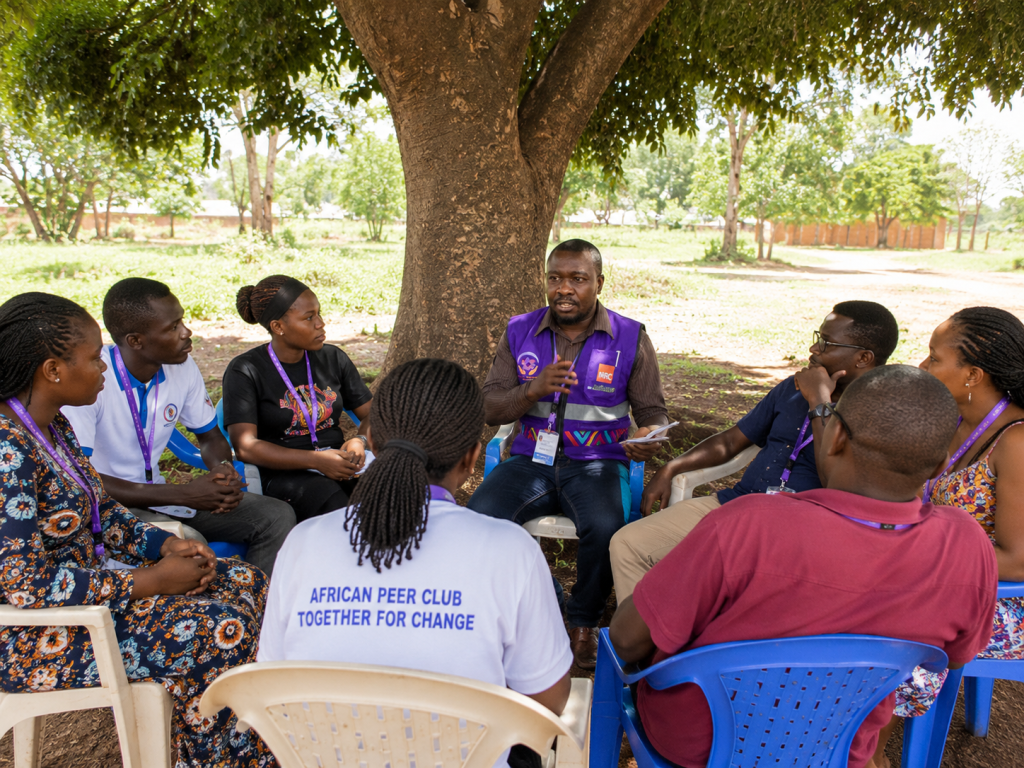
Building Calmer, Safer Schools from Within
Not every problem a student faces needs an adult to solve it. Sometimes, what helps most is a peer who understands, listens, and offers guidance without judgment. That’s the idea behind the Peace and Peer Counseling Clubs (PPCCs). An increasingly vital part of learning institutions is commitment to nurturing not just academic growth, but emotional and psycho-social well-being.
At African Rights for Economic Development (AFRIEDO), this is more than a concept we support from a distance. We work directly with learning institutions to train club patrons — the teachers and staff who guide these clubs on a day-to-day basis. Members are mentored based on a simplified, learner-centered, and relevant pre-approved workbook designed to mentor club members on peace-building and peer counseling.
More Than a Club
Peace and Peer Counseling Clubs give students a structured space to talk through conflict, stress, and the everyday pressures of school life — with trained peer counsellors guiding the conversation. These clubs train selected students to listen actively, mediate disagreements, and support classmates dealing with bullying, peer pressure, academic stress, or difficult situations at home.
The result is a culture where students don’t have to carry their struggles alone, and where small conflicts get resolved before they grow into bigger ones — whether that’s a disagreement between classmates or tension between different groups within the school.
Why Peace Belongs in the Classroom
Peace isn’t just the absence of conflict — it’s a skill that has to be taught and practiced. By giving students real tools for resolving disputes peacefully, listening with empathy, and managing their own emotions, these clubs help build habits that last well beyond school walls. A student who learns to mediate a friend’s disagreement today is more likely to become an adult who chooses dialogue over division tomorrow.
This is especially powerful in communities working to break cycles of violence, division, or instability. Schools are among the first places where young people can practice the values of tolerance, patience, and cooperation — making peace clubs a quiet but meaningful form of long-term peacebuilding.
A Structured Approach, Not Guesswork
AFRIEDO’s model is built for consistency. Rather than leaving club activities to chance, we train club patrons directly, giving them the skills and confidence to guide students through real conversations about conflict, empathy, and self-control. Patrons then use a pre-approved workbook as the foundation for every session — ensuring that what students learn in one school aligns with what’s being taught in another, and that the content has been vetted for quality and relevance.
This structure means peer counsellors don’t replace trained school counsellors or teachers — they work alongside them. Many students find it easier to open up to a fellow student first, someone closer to their own experience. With a well-trained patron guiding the process, club members also learn when to escalate an issue to a teacher or counsellor, creating a layered support system where no student falls through the cracks.
A Foundation for Stronger Communities
When schools invest in peace and peer counseling clubs — and when organizations like AFRIEDO invest in the patrons who run them — they’re investing in more than conflict resolution. They’re shaping young people who carry empathy, patience, and a commitment to nonviolence into their families, workplaces, and communities. Through consistent training and a shared workbook, AFRIEDO is helping build a generation of peacebuilders, one club at a time.